

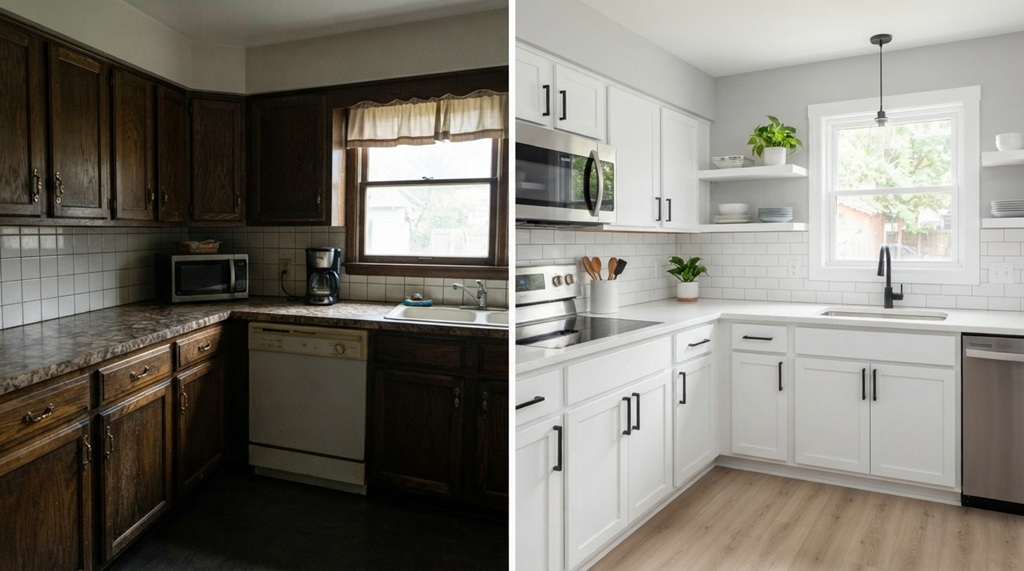
You can update your kitchen on a budget and still see a strong return. The trick is spending money where buyers actually look: cabinet fronts, hardware, lighting, and countertops. Skip the full gut renovation. Focus on the changes that move the needle at resale.
Real estate agents see this pattern every year. Buyers walk into a kitchen and decide within seconds if they like it. They rarely notice a brand-new dishwasher. They do notice dated cabinets, yellow lighting, and cracked tile. A smart budget update targets those visible details first.
This guide breaks down exactly which upgrades deliver the best return, how much to spend, and what to skip. It’s built for homeowners and agents who want real numbers, not vague advice.
Why Kitchen Updates Matter So Much for Resale Value
Kitchens sell homes more than any other room. Buyers judge the whole house based on how the kitchen looks and feels.
According to industry experts, minor kitchen remodels consistently rank among the top home improvements for return on investment, often recovering a large share of their cost at resale. Major overhauls tend to recover less of their cost, dollar for dollar, than smaller targeted updates.
This gap exists for a simple reason. A full remodel costs far more, but buyers won’t pay dollar-for-dollar more just because you spent more. A minor update costs less and closes more of that value gap. That’s why “budget-friendly” and “high-ROI” go together in the kitchen.
Set a Realistic Budget Before You Start
Your budget should match your home’s price range, not your dream kitchen. A $10,000 upgrade in a $250,000 home makes sense. That same upgrade in a $1.2 million home may look out of place next to the rest of the property.
How to Calculate a Smart Spending Limit
A common guideline is to spend no more than 10–15% of your home’s current value on the kitchen. This keeps your investment proportional to what buyers expect in that price bracket.
Start by pulling recent sale prices for similar homes nearby. Look specifically at kitchens in those listings. This tells you what buyers already expect at your price point, so you don’t overspend or underspend.
Where the Budget Usually Breaks Down
Most budget kitchen updates split spending three ways. Cabinets and hardware typically take the largest share. Countertops and backsplash come next. Lighting and fixtures round out the rest.
Track every purchase in a simple spreadsheet. This keeps you from creeping past your limit one “small” upgrade at a time.
The Highest-ROI Kitchen Updates You Can Make

Not every kitchen project pays off equally. These five updates consistently deliver strong value for the money.
Reface or Repaint Cabinets Instead of Replacing Them
Cabinets shape the entire look of a kitchen. Full replacement costs thousands more than refacing or repainting the same boxes.
Painting cabinets a neutral, modern color instantly modernizes a dated kitchen. White, warm gray, and soft greens photograph well and appeal to a wide range of buyers. Refacing swaps just the doors and drawer fronts, which cuts costs while still changing the whole feel of the room.
Swap Outdated Hardware and Fixtures
New cabinet pulls, faucets, and light fixtures cost little but change a lot. This is one of the highest-ROI moves in any budget kitchen update.
Choose one consistent finish throughout the kitchen, like matte black or brushed nickel. Mismatched finishes read as cluttered, even in an otherwise updated space.
Update Countertops Without Going Full Custom Stone
Laminate has improved a lot in recent years and can mimic stone convincingly at a fraction of the price. Butcher block is another budget-friendly option that adds warmth.
If your current countertops are structurally fine but look dated, resurfacing kits or professional refinishing can update the color and finish without a full replacement.
Smart Lighting Upgrades for Maximum Impact
Poor illumination instantly dates even the most thoughtfully renovated kitchen, as buyers immediately notice dim, yellow-toned lighting. Upgrading to a layered lighting strategy incorporating under-cabinet LED strips, modern statement pendants over the island, and crisp recessed fixtures dramatically enhances the room’s sense of scale and modern appeal. Opting for bright white or daylight LED bulbs instantly breathes new life into the space, making it feel larger and far more inviting. If you are planning high-impact upgrades to maximize equity before listing your property, explore our complete guide on increase home appraisal value to ensure every dollar invested delivers the highest possible return.
Add a Fresh Backsplash
A backsplash update is one of the fastest, most affordable kitchen projects. Peel-and-stick tile has come a long way and looks convincing in photos and in person.
For a bigger impact, a simple subway tile installed by a professional still costs far less than a full kitchen remodel and adds real visual value.
What to Skip If You Want to Stay on Budget
Some upgrades feel tempting but rarely pay off compared to their cost. Skipping them frees up money for the changes that matter more.
Avoid moving plumbing or gas lines unless absolutely necessary. Relocating a sink or stove adds major labor costs that buyers won’t see reflected in a higher offer. Avoid high-end smart appliances unless your neighborhood’s comps already include them. Most buyers care more about clean, updated basics than smart features they may not use.
Skip structural changes like knocking down walls unless an agent or appraiser confirms it will meaningfully boost your home’s value in your specific market. This kind of project rarely fits a true “budget” update anyway.
A Detail Most Guides Skip: Match the Update to Your Buyer Pool
Most kitchen ROI articles list the same five upgrades and stop there. One thing they often miss: your ideal update depends on who’s actually buying in your neighborhood.
Pull up the last 5–10 sold listings within a mile of your home. Look at their kitchen photos, not just their sale prices. If every recent sale shows white shaker cabinets and quartz-look counters, buyers in your market expect that look. Straying too far from it, even with a “nicer” choice, can actually work against you.
This step takes twenty minutes and prevents the most expensive mistake in a budget remodel: spending money on a style your buyer pool doesn’t want.
Timing Your Kitchen Update Before Selling
Start your kitchen update at least 4–6 weeks before listing your home. This gives contractors time to finish and lets paint, caulk, and adhesives fully cure before photos and showings.
Rushed projects show. Buyers and their agents notice fresh paint smell, uneven caulking, or loose hardware during a walkthrough. A slightly earlier start protects the polished look you’re paying for.
Frequently Asked Questions
How much should I spend on a budget kitchen update before selling?
Most homeowners see the best return spending between 5% and 10% of their home’s value on a minor kitchen update. Going much higher rarely returns dollar-for-dollar value at resale. Check recent comparable sales in your area to fine-tune this number.
Is painting cabinets worth it, or should I replace them?
Painting or refacing cabinets is almost always worth it if the cabinet boxes are structurally sound. It costs a fraction of full replacement and delivers a similarly fresh look in photos and showings. Full replacement only makes sense if cabinets are damaged or poorly laid out.
Do stainless steel appliances still add value?
Stainless steel remains a safe, widely appealing choice for most buyers. However, matching finishes across appliances matters more than the specific metal tone. A mismatched kitchen with three different finishes looks less updated than a cohesive one with older appliances.
Should I install new flooring as part of a budget kitchen update?
Only if the current floor is visibly damaged or heavily worn. Flooring is expensive and often falls outside a true budget update. If the floor is in decent shape, spend that money on cabinets, hardware, and lighting instead.
How do I know which upgrades my local buyers actually want?
Look at recent sold listings in your neighborhood and study their kitchen photos closely. This shows you the exact style and finish level buyers in your market already expect. Matching that expectation, rather than guessing, is the single best way to protect your ROI.
Conclusion
A budget kitchen update can absolutely deliver a strong return, as long as the money goes to the right places. Focus on cabinets, hardware, lighting, countertops, and backsplash. Skip costly structural changes and appliances your market doesn’t expect. Check what similar homes nearby are showing buyers, then match your update to that standard. Done right, a modest, well-planned kitchen refresh can be one of the smartest moves you make before listing your home.