

To calculate home affordability, add up your monthly income, subtract your existing debts, and use the 28/36 rule to figure out how much you can safely spend on a mortgage payment each month. From there, you can work backward to estimate a realistic home price range. This single number your true affordability, not just what a lender says you qualify for is the foundation every house hunt should start with.
Too many buyers reverse this process. They fall in love with a listing, then scramble to figure out if they can actually afford it. That’s how people end up “house poor,” technically owning a home but stretched too thin to enjoy it. Calculating affordability first protects your finances and saves you from touring homes that were never realistically in reach.
This guide walks through the exact math, the hidden costs buyers forget, and how to turn your numbers into a search-ready budget before you contact a single agent.
Why Affordability and Pre-Approval Amount Are Not the Same Thing
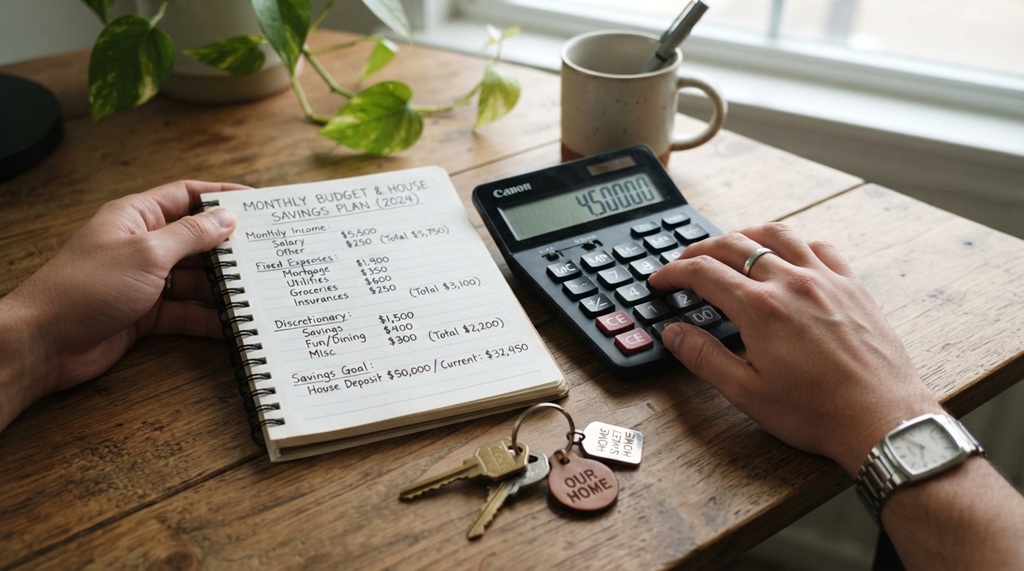
A pre-approval tells you the maximum a lender will loan you it does not tell you what you can comfortably afford to pay every month. Lenders calculate pre-approval based on debt-to-income ratios and credit history, but they don’t know your grocery bill, your childcare costs, your travel habits, or how much you want to save.
It’s common for lenders to approve buyers for more house than fits their actual lifestyle. That’s not a lender error; it’s simply outside the scope of what pre-approval measures. Affordability is a personal number based on your full financial picture, while pre-approval is a lending decision based on risk models.
Before house hunting, treat your pre-approval letter as a ceiling, not a target. Your real budget should usually sit below it.
The 28/36 Rule: The Standard Affordability Formula
The 28/36 rule is the most widely used framework for calculating home affordability, and it works by capping two ratios of your gross monthly income. It’s a starting point, not a strict law, but it gives you a reasonable, lender-recognized benchmark.
How the 28% Front-End Ratio Works
Your monthly housing costs principal, interest, property taxes, and insurance (often called PITI) shouldn’t exceed 28% of your gross monthly income. If your household earns $7,000 a month before taxes, that caps your housing payment around $1,960.
How the 36% Back-End Ratio Works
Your total monthly debt, including housing costs plus car loans, student loans, credit cards, and other obligations, shouldn’t exceed 36% of gross monthly income. Using the same $7,000 example, total debt payments should stay under $2,520, which includes that $1,960 housing figure.
Why Both Numbers Matter Together
A buyer with no other debt might comfortably stretch closer to 36% on housing alone, while a buyer with a car payment and student loans has much less room. Calculating both ratios together not just the housing number in isolation is what makes this formula useful rather than misleading.
Step-by-Step: Calculating Your Real Affordability Number
Here’s how to turn the 28/36 rule into an actual dollar figure you can search with.
- Add up gross monthly household income. Include salary, consistent bonuses, freelance income, and any other regular earnings before taxes.
- List all recurring monthly debts. Car payments, student loans, minimum credit card payments, personal loans, and child support or alimony.
- Multiply income by 0.28 to find your maximum comfortable housing payment.
- Multiply income by 0.36, then subtract your existing debts to double-check your housing number doesn’t push you over the total limit.
- Use the lower of the two results as your working housing budget.
- Convert that monthly figure into a home price using a mortgage calculator, factoring in your expected interest rate, loan term, and down payment.
Running these numbers takes about ten minutes and instantly narrows your search to homes that actually fit your finances, rather than a wide range you’ll have to filter through later.
Hidden Homeownership Costs Beyond the Monthly Mortgage
While most buyers focus strictly on their principal and interest, true home affordability extends far beyond the basic mortgage payment. Hidden expenses such as property taxes, home insurance, maintenance reserves, utility spikes, and HOA dues frequently catch buyers off guard and skew monthly budgets if left unaccounted for. A complete financial picture requires factoring in these recurring costs before setting a target price range, ensuring long-term financial stability rather than just short-term qualification. Once you have mapped out these hidden variables and established a realistic budget, the critical next step is securing your financing – get pre-approved for a mortgage fast and easy so you can tour open houses with absolute buying confidence.
Property Taxes and Homeowners Insurance
These vary significantly by location and are usually rolled into your monthly payment through an escrow account, but the amounts differ widely between neighborhoods and even between similar homes on the same street. Always check the actual current tax bill for a specific property rather than assuming a flat regional average.
HOA Fees and Special Assessments
Homes in planned communities or condo buildings often carry monthly HOA dues that can range from modest to substantial, and some communities levy special assessments for major repairs. This cost is easy to overlook when comparing listing prices, but it directly affects monthly affordability.
Maintenance and Repairs
According to industry experts, homeowners commonly budget around 1% of a home’s value annually for maintenance and repairs, though older homes or homes with aging systems (roof, HVAC, plumbing) often run higher. This isn’t a bill you’ll see upfront, but it’s a real cost of ownership that renters simply don’t face.
Closing Costs and Move-In Expenses
Closing costs typically run a few percentage points of the purchase price, and buyers also need to budget for moving expenses, immediate repairs, and furnishing needs. Factoring these one-time costs into your savings plan separate from your monthly affordability number prevents a cash crunch right after closing.
The Down Payment Trade-Off Most Calculators Ignore
Most online affordability calculators treat your down payment as a fixed input, but the size of your down payment actually reshapes your entire affordability equation in ways worth thinking through deliberately.
A larger down payment lowers your monthly payment and may eliminate private mortgage insurance (PMI) on a conventional loan, freeing up monthly cash flow that increases what you can afford long-term. But putting every available dollar into a down payment can leave you without a healthy emergency fund right when you’re taking on new homeownership costs like repairs and maintenance.
A genuinely useful approach is to calculate affordability twice: once assuming a smaller down payment that preserves 3-6 months of expenses in savings, and once assuming a larger down payment that reduces PMI or lowers the monthly payment. Comparing these two scenarios side by side — rather than picking a down payment amount first and calculating around it often reveals a sweet spot buyers miss when they only run the numbers once.
How Interest Rates Change What You Can Afford

The same monthly budget buys very different homes depending on the interest rate, which is why affordability should be recalculated whenever rates shift meaningfully. A one-percentage-point change in interest rate can shift your buying power by tens of thousands of dollars on the same monthly payment.
This matters most for buyers who calculated affordability months ago and are only now starting to shop. If rates have moved since you first ran your numbers, rerun the calculation with a current rate estimate from a lender rather than relying on your original figure. It’s also worth calculating affordability at a slightly higher rate than currently quoted, giving yourself a buffer in case rates rise before you lock one in.
Turning Your Number Into a Smart House-Hunting Budget
Once you have a monthly payment figure and estimated home price range, translate it into practical search parameters before you start touring homes. Set your online listing search filters slightly below your calculated maximum, not at it, to leave room for homes that need minor negotiation or have slightly higher taxes than average.
It also helps to separate your “comfortable” number from your “stretch” number. Knowing both in advance means you can act quickly and confidently if a home you love falls between the two, instead of making that financial decision on the spot during a stressful bidding situation.
Frequently Asked Questions
How much of my income should go toward my mortgage payment?
Most financial guidelines suggest keeping housing costs at or below 28% of your gross monthly income, with total debt (including housing) under 36%. Your comfortable number may be lower if you have other financial goals like saving aggressively or paying down debt.
Is pre-approval the same as knowing what I can afford?
No. Pre-approval shows the maximum a lender is willing to loan based on your credit and debt profile, but it doesn’t account for your personal spending habits, savings goals, or lifestyle costs. Many buyers choose to spend less than their full pre-approval amount.
Should I include potential rental income when calculating affordability?
If you’re buying a property with a rental unit, lenders may count a portion of projected rental income toward your qualifying income, but it’s wise to calculate affordability using only your primary income as a safety margin. Relying too heavily on future rental income before it’s proven can leave you exposed if the unit sits vacant.
How often should I recalculate affordability while house hunting?
Recalculate whenever your income, debt, interest rates, or savings change, and at minimum every few months if your search is taking a while. Market conditions and personal finances can shift enough during a long search to change your realistic budget.
Does a bigger down payment always mean I can afford a more expensive home?
Not necessarily. A bigger down payment lowers your monthly payment, but only if it doesn’t drain the emergency savings you’ll need for moving costs, repairs, and unexpected expenses after closing. Affordability should account for financial stability after the purchase, not just the purchase price itself.
Conclusion
Calculating home affordability before house hunting comes down to knowing your real numbers income, debt, hidden ownership costs, and a comfortable monthly payment rather than relying solely on a lender’s maximum approval amount. Running the 28/36 rule, accounting for taxes, insurance, maintenance, and closing costs, and stress-testing your budget against different down payments and interest rates gives you a search-ready number you can trust. Walking into your home search with that clarity means fewer wasted showings, stronger negotiating confidence, and a home that fits your finances long after moving day.