

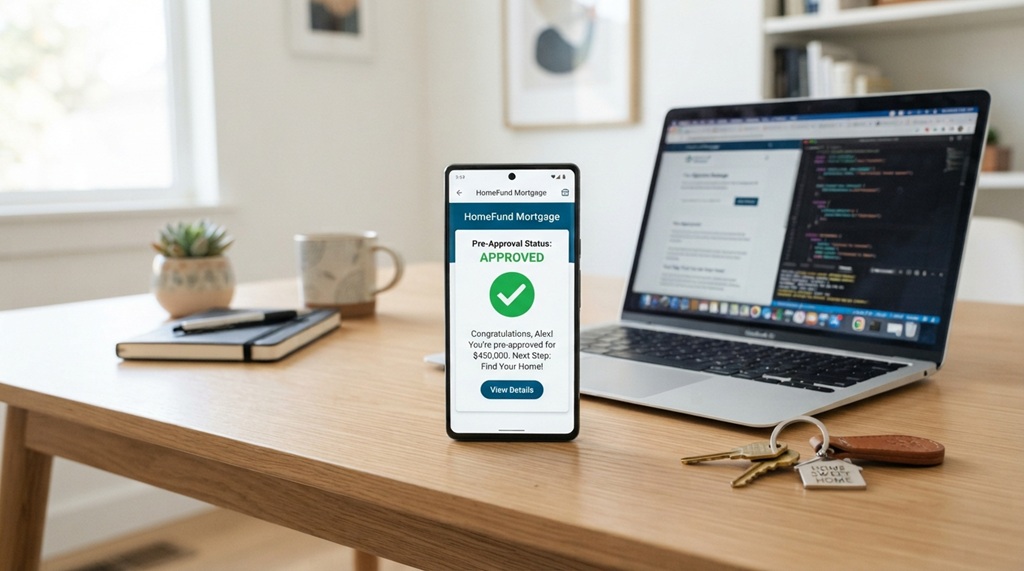
Getting pre-approved for a mortgage fast comes down to three things. Have your financial documents ready before you apply. Choose a lender who can move quickly. Avoid the small mistakes that stall underwriting. Most borrowers who prepare in advance get a pre-approval letter back within 24 to 72 hours. The paperwork causes delays, not the process itself.
If you plan to buy a home soon, you need a mortgage pre-approval. This matters even more in a competitive market. Sellers and agents often won’t take your offer seriously without one. The good news: with the right prep, you can go from “thinking about buying” to “holding a pre-approval letter” in just a few days.
This guide covers what pre-approval means, what documents you need, how to speed up the process, and the mistakes that trip up even well-qualified buyers.
What Mortgage Pre-Approval Actually Means

Pre-approval is a lender’s conditional commitment to loan you a specific amount. The lender bases this on your income, credit, assets, and debts. It differs from pre-qualification, which just estimates what you might borrow based on information you self-report, without any verification.
During pre-approval, the lender pulls your credit report. They verify your income through pay stubs or tax returns. They also check your bank statements for assets. Once approved, you’ll get a pre-approval letter stating how much you can borrow. This letter usually stays valid for 60 to 90 days. Real estate agents and sellers want to see this letter before they’ll take your offer seriously.
Pre-qualification works differently. You can sometimes complete it in minutes over the phone or online. But it carries far less weight, since nothing has actually been verified. If you plan to buy soon, pre-approval is the step that matters most.
Streamline Your Application: Essential Documents to Gather First
The single most effective way to accelerate your mortgage pre-approval is assembling your documentation beforehand. Lenders cannot finalize underwriting without complete financial records, and missing paperwork remains the primary driver of unexpected closing delays. By organizing your pay stubs, tax returns, bank statements, and identification in advance, you eliminate back-and-forth friction and position yourself as a low-risk, fast-track applicant. Once your paperwork is organized and pre-approval is secured, you’ll be ready to navigate the purchase process with confidence, buy your first home without costly mistakes to avoid budget traps and protect your financial standing.
Income and Employment Verification
You’ll typically need your two most recent pay stubs and W-2 forms from the last two years. Self-employed borrowers should also prepare a year-to-date profit and loss statement. If your income varies, expect to provide two years of federal tax returns as well.
Bank Statements and Asset Documentation
Lenders usually ask for two to three months of statements. This includes checking, savings, and any investment or retirement accounts you plan to use for a down payment. Large, unexplained deposits will need a written explanation. Review your statements ahead of time and prepare documentation for anything unusual.
Credit and Debt Information
The lender will pull your credit report directly. Still, it helps to know your approximate score beforehand. List your current debts too car loans, student loans, credit cards along with balances and monthly payments. This lets you spot errors on your credit report before they slow things down.
Identification and Additional Paperwork
Bring a government-issued photo ID and your Social Security number. If you’re divorced, receive alimony or child support, or have other non-traditional income, gather that documentation early too.
How to Speed Up the Pre-Approval Process
Fast pre-approvals happen when borrowers eliminate back-and-forth with the lender. Here’s how to make that happen.
Apply With a Lender That Offers Digital Document Upload
Many lenders now let you upload documents through a secure portal or app. This alone can cut days off the process compared to lenders who still rely on email or fax.
Get Pre-Approved Before You Start House Hunting
This sounds obvious, but many buyers wait until they find a home to start the process. Then they scramble. Apply early instead. This way, any issues credit report errors, missing documents, income questions surface while you still have time to fix them, not during a tight closing timeline.
Respond to Lender Requests the Same Day
Underwriters work through queues. A slow response from you can push your file back another day or two. Set up email or app notifications. Answer requests within hours, not days, to keep your file moving.
Consider Getting Pre-Approved With More Than One Lender
This tactic doesn’t get enough attention. Apply with two lenders at the same time, within a 14 to 45 day window (the exact window depends on the credit scoring model). This typically counts as just one credit inquiry for scoring purposes. It also lets you compare speed and terms in real time. If one lender moves slowly or asks for extra documentation, you’ll already have a backup in progress. Most articles only tell you to “shop around” for rates. Shopping around for speed matters just as much when your timeline is tight.
Common Mistakes That Slow Down Pre-Approval
Even financially strong borrowers run into delays. Usually, a handful of avoidable mistakes cause the holdup.
Making Big Purchases or Opening New Credit
Buying a car, financing furniture, or opening a new credit card between application and approval can hurt you. These moves can change your debt-to-income ratio enough to affect your approval amount. They can even trigger a full re-underwriting of your file. Hold off on major financial moves until after closing.
Switching Jobs or Changing Pay Structure
Lenders want to see stable, verifiable income. Switching from salaried to commission-based work, changing employers, or taking a pay cut mid-process can trigger extra documentation requests. In some cases, it can derail your approval entirely.
Leaving Gaps or Unexplained Deposits in Bank Statements
Cash deposits, transfers from unnamed accounts, and gifts without a paper trail raise red flags for underwriters. If a family member plans to gift you down payment funds, get a signed gift letter ready in advance. This ranks among the most common last-minute delays.
Not Checking Your Credit Report First
Credit report errors happen more often than most people expect, according to industry experts. Pull your own report a few weeks before applying. This gives you time to dispute inaccuracies before they lower your score or trigger extra scrutiny.
Choosing the Right Lender for a Fast Pre-Approval

Not all lenders move at the same speed. Picking the right one matters as much as your own preparation. Online lenders and mortgage tech companies often advertise same-day or 24-hour pre-approvals. Traditional banks and credit unions may take three to five business days, depending on their volume.
Ask any lender two direct questions: What’s your average pre-approval turnaround time? Do you offer digital document submission? The answers tell you a lot about whether they can actually deliver on “fast.” Also ask your real estate agent which lenders they’ve seen close quickly in your local market. Agents often know which lenders respond fast and which ones create bottlenecks during underwriting.
What Happens After You’re Pre-Approved
Once you have your pre-approval letter, you can start making offers backed by a real, verified number. This differs from final loan approval, which happens later. Final approval includes a home appraisal and a final underwriting review of the specific property you’re buying.
Your pre-approval reflects a snapshot in time. If your financial situation changes job loss, new debt, a drop in credit score your final approval amount could change too. For this reason, lenders advise against major financial decisions between pre-approval and closing.
Frequently Asked Questions
How long does mortgage pre-approval take?
Most pre-approvals take between 24 hours and a few business days if you have your documents ready. Online lenders with digital document upload tend to move fastest. Traditional banks may take three to five business days.
Does getting pre-approved hurt my credit score?
Pre-approval involves a credit inquiry, which can cause a small, temporary dip in your score. Credit scoring models typically treat multiple lender applications within a short window (14–45 days) as a single inquiry. This means shopping around won’t multiply the impact on your score.
Is pre-approval the same as being guaranteed a mortgage?
No. Pre-approval gives you a conditional commitment based on your financial documents. Final approval also depends on the specific property’s appraisal and a final underwriting review. Think of it as a strong indicator, not a guarantee.
How long is a mortgage pre-approval valid?
Most pre-approval letters stay valid for 60 to 90 days. If your home search takes longer, you’ll likely need to update your documents and get re-approved before making an offer.
Can I get pre-approved with bad credit?
Yes, it’s possible, though your options and interest rate may be more limited. Some loan programs, like FHA loans, allow lower credit score thresholds than conventional loans. Talk to a lender directly about your specific situation.
Final Thoughts
Getting pre-approved for a mortgage fast isn’t about finding a shortcut. It’s about eliminating the delays that trip up unprepared borrowers. Gather your documents before you apply. Choose a lender with a fast, digital process. Respond quickly to requests, and avoid major financial changes while your application is in progress. Do that, and your pre-approval shouldn’t take longer than a few days.