


You can get mortgage pre-approval in as little as 24 to 48 hours if you have your documents ready. Most delays happen because buyers start the process without the right paperwork. Lenders need proof of income, assets, and identity before they can issue a pre-approval letter.
House hunting without pre-approval wastes time. Sellers and agents often won’t take you seriously without one. Worse, you risk falling in love with a home you can’t actually afford.
This guide walks you through the fastest path to pre-approval. You’ll learn what documents to gather, which lenders move quickest, and how to avoid the mistakes that slow buyers down.
What Mortgage Pre-Approval Actually Means
Pre-approval is a lender’s written commitment to loan you a specific amount, based on a review of your finances. It’s different from pre-qualification, which is just an estimate based on information you self-report.
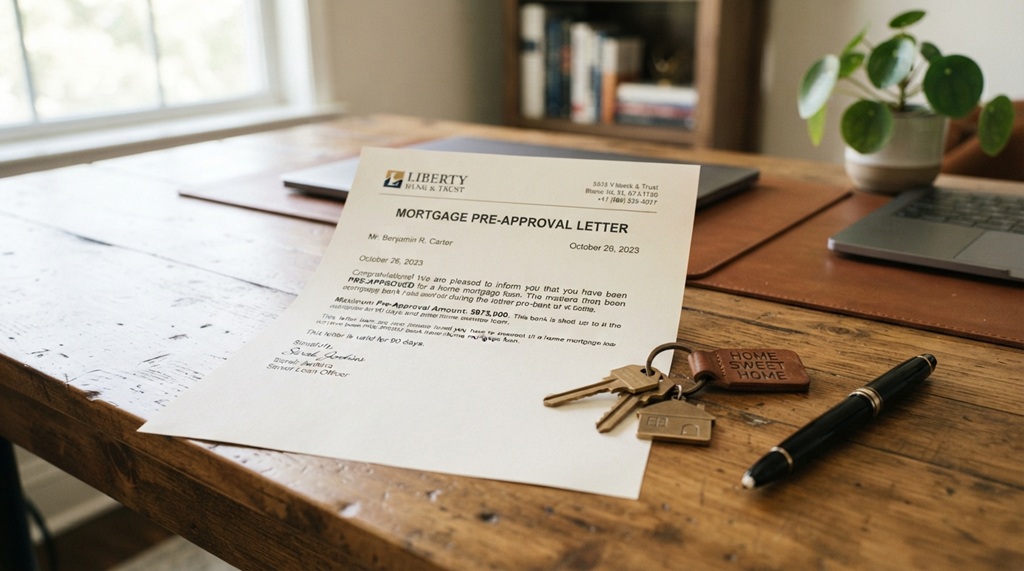
A lender verifies your income, credit, debts, and assets during pre-approval. They pull your credit report and check your documents. The result is a pre-approval letter that states how much you can borrow and at what estimated rate.
Why Sellers Favor Pre-Approved Buyers
Sellers prioritize offers backed by bulletproof financing, as proof of purchasing power is often the deciding factor in securing a deal. A mortgage pre-approval letter signals to listing agents and homeowners alike that you have passed rigorous institutional checks, transforming your offer from a non-binding intent into an actionable commitment. In high-demand markets, sellers routinely discard unverified offers even those above asking price to eliminate the risk of delayed closings or deal cancellations. Aligning your pre-approval with a comprehensive strategy, such as our guide on buy your first house, ensures you position your offer as the safest, most competitive bid on the table.
Documents You Need Before You Apply
Gathering documents ahead of time is the single biggest factor in getting pre-approved fast. Lenders can’t move forward without them, so missing paperwork is the top cause of delays.
Have these ready before you start your application:
- Two recent pay stubs or proof of income
- W-2s or tax returns from the last two years
- Two to three months of bank statements
- A government-issued photo ID
- Proof of any additional income, like bonuses or freelance work
- Documentation for existing debts, such as car loans or student loans
Self-Employed Borrowers Need Extra Paperwork
Self-employed applicants usually need two years of tax returns, profit and loss statements, and sometimes a CPA letter confirming their business income. Gather these early, since they take longer to compile than pay stubs. Reach out to your accountant before you apply, not after a lender asks for them.
How to Speed Up the Pre-Approval Process
You can cut your pre-approval timeline in half by preparing correctly and choosing the right lender. Here’s what actually moves the needle.
Check Your Credit Report First
Pull your credit report before applying, and fix any errors you find. A dispute that surfaces mid-application can stall your file for weeks. You’re entitled to a free credit report annually from each major bureau, so use that before you talk to a lender.
Apply With Multiple Lenders in a Short Window
Credit scoring models generally treat multiple mortgage inquiries within a 14 to 45 day window as a single inquiry. This means you can shop several lenders for rate comparisons without a heavy hit to your credit score. Applying to two or three lenders at once also lets you compare speed, not just rate.
Respond to Lender Requests Immediately
Most delays after submission happen because a buyer takes days to send a follow-up document. Set aside time to answer emails and calls during the days right after you apply. A same-day response can shave a full week off your timeline.
Use a Lender With Digital Document Upload
Lenders that let you upload documents through an app or portal process files faster than those relying on email or fax. Ask about this before choosing a lender, since it can make a real difference in turnaround time.
Common Mistakes That Slow Down Pre-Approval
Certain habits cause otherwise-ready buyers to wait far longer than necessary. Avoiding these keeps your timeline tight.
- Making big purchases before applying. A new car loan or a large credit card charge can change your debt-to-income ratio and trigger extra review.
- Switching jobs mid-process. Lenders want to see stable income, so a job change can restart parts of the verification.
- Large, unexplained bank deposits. Lenders flag deposits they can’t trace, and you’ll need to document the source, which adds time.
- Applying with incomplete information. Guessing at income or debt figures instead of pulling exact numbers leads to back-and-forth corrections.
One angle that many guides skip: keep a folder of PDFs ready on your phone or cloud drive before you even pick a lender. Buyers who scramble to find paperwork after a lender asks for it lose days. Buyers who already have everything scanned and labeled can often submit a full application in under an hour.
Online Lenders vs. Local Banks: Which Is Faster?
Online lenders are generally faster for pre-approval because their systems automate document review and credit checks. Local banks and credit unions can still be quick, but they often rely more on manual review, especially for self-employed or complex-income borrowers.
That said, speed isn’t everything. A local loan officer who knows your market can sometimes flag issues an automated system misses, which saves time later during full underwriting. If your finances are straightforward, an online lender is usually the faster choice. If your situation is complex, a local lender’s manual review can actually prevent delays down the road.
How Long Does Pre-Approval Actually Take?
Pre-approval usually takes one to three business days once you submit a complete application. Some online lenders offer same-day pre-approval letters if your documents are in order and your credit is straightforward.
The timeline stretches when a lender needs extra verification, such as confirming self-employment income or clarifying a large deposit. Submitting a complete, accurate application the first time is the fastest way to avoid this.
FAQ
How long is a mortgage pre-approval letter valid?
Most pre-approval letters are valid for 60 to 90 days. After that, you’ll need updated documents, since lenders want current income and credit information before you make an offer.
Does getting pre-approved hurt my credit score?
Yes, slightly. A pre-approval involves a hard credit inquiry, which can lower your score by a few points. The effect is usually small and temporary, and shopping multiple lenders within a short window counts as one inquiry for scoring purposes.
Can I get pre-approved with bad credit?
Yes, though your options and rate will be more limited. Some lenders specialize in borrowers with lower credit scores, and government-backed loans like FHA loans often have more flexible requirements than conventional loans.
What’s the difference between pre-qualification and pre-approval?
Pre-qualification is a quick estimate based on numbers you report yourself, with no document verification. Pre-approval involves an actual credit check and document review, which makes it a stronger, more reliable statement of what you can borrow.
Do I need pre-approval before making an offer on a house?
In most markets, yes. Sellers and listing agents typically expect a pre-approval letter with any serious offer, and without one, your offer may not even get considered in a competitive market.
Conclusion
Getting mortgage pre-approval fast comes down to preparation. Gather your documents before you apply, check your credit report early, and respond quickly when a lender asks for more information. Buyers who do this can often get a pre-approval letter within a day or two, putting them in a strong position before they ever walk into an open house.