


You can negotiate a house price down by researching comps, timing your offer, and using leverage the seller doesn’t expect you to have. Most buyers lose money at the negotiating table simply because they never learned these skills. Investors treat every deal as a business decision, not an emotional one, and that mindset alone saves them thousands.
This guide breaks down exactly how experienced investors approach price negotiations. You’ll learn what to say, when to say it, and which tactics actually move sellers. No fluff, no guesswork.
By the end, you’ll have a clear plan you can use on your very next offer.
Why Most Buyers Overpay for Homes
Most buyers overpay because they fall in love with a house before they understand its true value. Emotion drives bad decisions. Once a buyer pictures their furniture in the living room, logic tends to disappear.
Investors avoid this trap by separating the property from the purchase. They ask one question: does the price match the data? If it doesn’t, they walk away or negotiate hard. Nothing personal enters the equation.
The Emotional Trap Buyers Fall Into
Buyers often anchor to the listing price and treat it as fixed. In reality, listing prices are starting points set by the seller’s agent. Sellers expect some negotiation. Skipping that step almost always costs you money.
Research the Real Market Value Before You Offer
You must know a home’s real value before making an offer, or you’ll negotiate blind. Pull recent comparable sales, not just active listings. Active listings show what sellers want. Closed sales show what buyers actually paid.
Look at homes sold within the last 90 days, within a half-mile radius, with similar square footage and condition. Adjust for upgrades or repairs needed. This gives you a realistic price range instead of a guess.
Where to Find Reliable Comps
Public county records, real estate platforms like Redfin or Zillow, and a local agent’s MLS access all provide comp data. Investors often combine two or three sources to cross-check numbers. A single source can be outdated or incomplete.
Understanding Days on Market (DOM)
A home sitting on the market for 60+ days signals weaker seller leverage. Long DOM often means overpricing, hidden issues, or low buyer interest. This detail alone can justify a lower offer.
Time Your Offer Around Seller Motivation
Timing your offer around the seller’s motivation gives you leverage that price alone can’t buy. A seller relocating for a new job in three weeks behaves very differently than someone testing the market with no urgency.
Ask the listing agent direct questions: Why is the seller moving? How flexible is the closing date? Has the price already dropped? These answers reveal how much room exists to negotiate.
Signs of a Motivated Seller
Price reductions, vacant homes, expired listings relisted with a new agent, and estate sales all point to sellers who want a deal done quickly. According to industry experts, motivated sellers are far more likely to accept below-asking offers than those in no rush to move.
Leveraging Inspection Findings into Price Concessions
A home inspection provides your single most compelling point of leverage during property acquisition. Even well-maintained homes invariably reveal negotiable defects—from aging roofing systems and outdated electrical panels to minor structural settle—that serve as direct capital offsets. Rather than overwhelming the seller with an exhaustive list of trivial repairs, strategically request a seller credit or an equivalent reduction in purchase price, as sellers almost always prefer a seamless closing over managing pre-sale contractor work. Before finalizing your offer strategy, review fix home inspection issues before closing the deal to transform critical structural findings into powerful bargaining chips at the negotiating table.
How to Present Repair-Based Requests
Present findings factually, with contractor estimates attached when possible. A specific number (“$4,200 to replace the water heater and repair the deck”) lands better than a vague complaint. Vague requests get dismissed. Specific numbers get taken seriously.
Structure Your Offer Like an Investor
Investors structure offers to protect their leverage, not just their price. A lower offer paired with a fast, clean close often beats a higher offer full of contingencies. Sellers value certainty almost as much as money.
Consider offering a larger earnest money deposit to signal seriousness, while keeping your price below asking. This combination reassures the seller you’re committed, even at a lower number.
The Power of a Clean, Simple Offer
Fewer contingencies mean fewer reasons for a seller to hesitate. If you can waive a minor contingency without real risk, doing so may justify asking for a bigger price cut elsewhere.
Negotiation Tactics That Actually Work
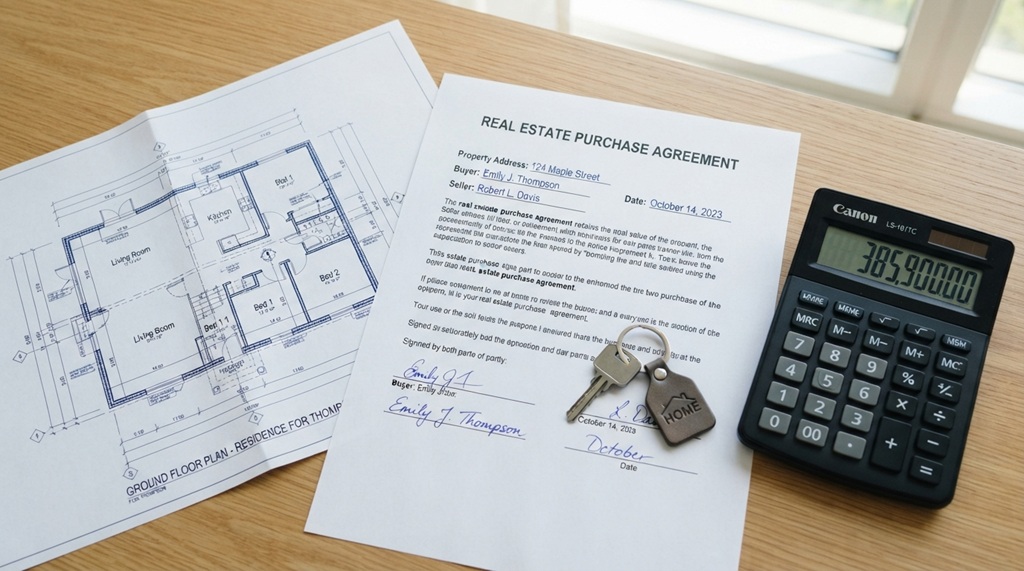
Successful negotiation tactics rely on data, patience, and controlled communication, not aggressive pressure. Investors rarely make emotional counteroffers. They respond with facts.
- Anchor low, but justify it. Back every lowball offer with comps or inspection data. An unexplained low offer insults sellers. A justified one starts a real conversation.
- Use silence strategically. After presenting an offer, stop talking. Silence often pushes the other side to fill the gap, sometimes with concessions.
- Negotiate terms, not just price. Closing date flexibility, included appliances, or a rent-back agreement can offset a higher price you’re willing to pay.
- Know your walk-away number in advance. Decide your maximum price before emotions take over during counteroffers.
A Tactic Most Articles Skip: The “Second Offer” Strategy
Here’s an angle rarely discussed: instead of countering aggressively after a rejected first offer, submit a second, slightly improved offer paired with a short response deadline. This creates gentle urgency without appearing desperate. Sellers often respond faster to a clean, time-bound offer than to a drawn-out back-and-forth. Investors use this specifically to avoid getting stuck in negotiation loops that drain leverage over time.
Common Mistakes That Kill Your Negotiating Power
Buyers lose negotiating power the moment they reveal too much information or show visible urgency. Sellers and agents pick up on tone, timing, and body language, even during phone calls or emails.
Avoid saying things like “we love this house” or “we need to move fast” directly to the listing agent. These phrases signal weak leverage. Keep communication professional and neutral.
Another common mistake: making your first offer your best offer. This removes room to negotiate and signals inexperience.
Frequently Asked Questions
How much can you realistically negotiate a house price down?
Most successful negotiations result in a 3% to 10% reduction from the asking price, depending on market conditions and seller motivation. In a buyer’s market, larger reductions are more common. In a competitive seller’s market, negotiating room shrinks significantly.
Is it rude to offer below asking price?
No, offering below asking price is a normal part of real estate transactions, as long as the offer is reasonable and backed by data. Sellers expect some negotiation unless the listing explicitly states a firm price.
Should you tell the seller your maximum budget?
No, revealing your maximum budget removes your negotiating leverage completely. Keep your top number private and let the seller make the next move instead.
Does a cash offer help you negotiate a lower price?
Yes, cash offers typically carry more negotiating weight because they remove financing risk and often close faster. Sellers frequently accept a lower cash offer over a higher financed one for this reason.
What’s the best time of year to negotiate a lower home price?
Late fall and winter months generally offer more negotiating room, since buyer demand slows and serious sellers remain active. Fewer competing offers give buyers more leverage during this period.
Final Thoughts
Negotiating a house price down isn’t about aggression. It’s about preparation. When you understand comps, seller motivation, and inspection leverage, you walk into every negotiation with real power instead of guesswork.
Treat every offer like an investor would: backed by data, free of emotion, and structured to protect your leverage. That mindset is what separates buyers who overpay from buyers who consistently win better deals.